Key Takeaways:
- Ask Maps helps users discover businesses through conversation instead of traditional search.
- Customers may increasingly make decisions based on AI-generated recommendations and summaries.
- Your Google Business Profile plays a major role in how Google understands and recommends your business.
- Consistent information across your website, social media, and listings helps reinforce your online presence.
For years, finding a local business followed a familiar pattern. Someone searched Google or Google Maps, scrolled through a list of results, compared a few businesses, and made a decision. Google is now redesigning that experience.
Recent AI updates to Google Maps and Google Search are transforming how customers discover local businesses. Instead of simply showing a list of options, Google’s AI can answer detailed questions, recommend businesses, summarize reviews, and help users decide faster.
For business owners, this means local search is becoming less about showing up in a list and more about becoming the recommendation.
Here’s how Google’s Ask Maps update is changing local search, what that means for your Google Business Profile, and what your business can do to prepare.
How Google’s AI Is Changing Local Search
Google’s newest AI features are designed to make local search feel more like a conversation. Instead of searching for: “professional organizer near me” and sorting through dozens of profiles, users can ask a question such as:
“Who can help me declutter my garage before we move next month?”
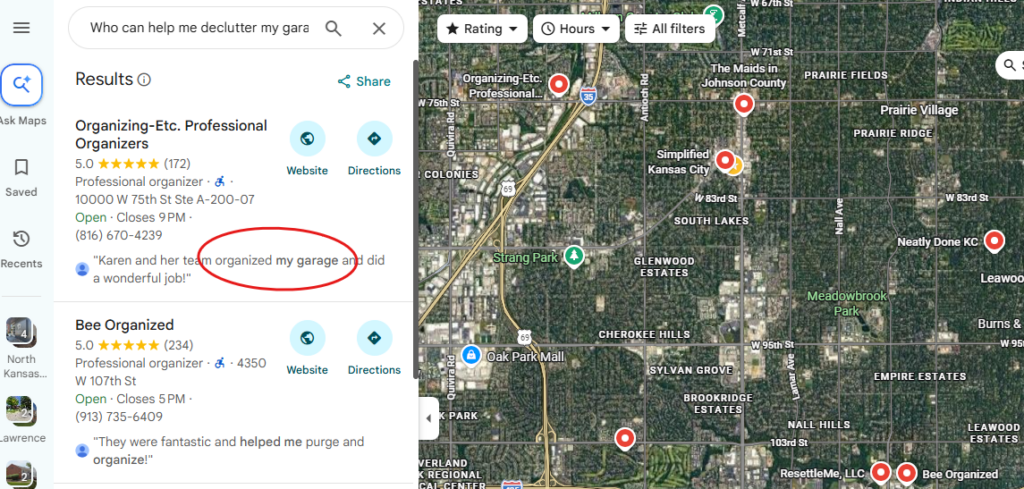
Rather than returning a list of links, Google’s AI attempts to understand the context of the request and recommend the businesses that appear to be the best fit. That shift matters because it changes what businesses are competing for. Traditionally, local SEO focused on ranking. Businesses wanted to appear near the top of Google Maps and local search results.
Now, businesses need to provide enough information for AI systems to confidently recommend them when customers ask detailed questions.
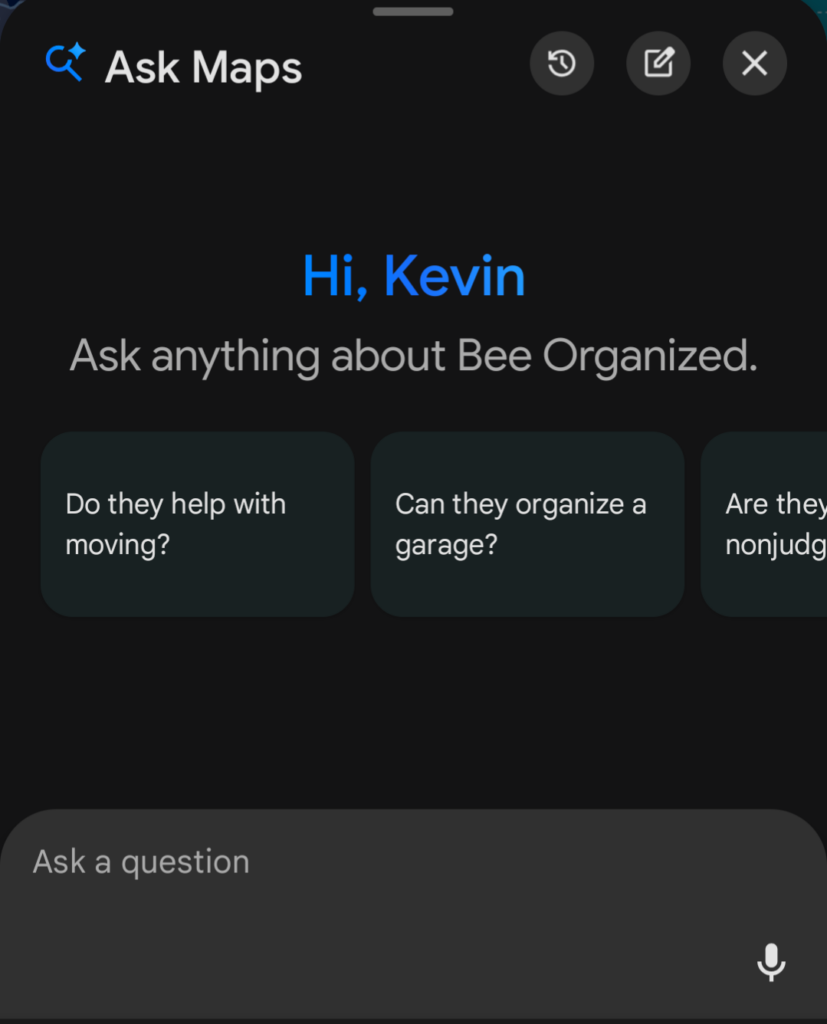
What Google’s Ask Maps Update Actually Changes
Ask Maps is a conversational AI feature inside the Google Maps app, powered by Google’s Gemini models. Google announced in March 2026, initially in the U.S. and India, and expanded it to more than 150 additional countries in August 2026. It lets users ask natural-language questions and get recommendations without leaving Maps.
Instead of searching by simple keywords, users can describe a situation, preference, or goal and receive personalized recommendations.
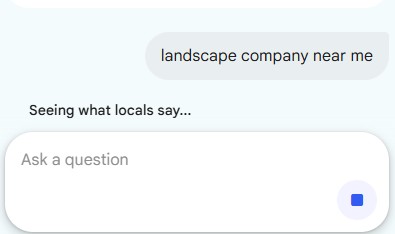
Traditional Google Map Search: Landscaping company near me
With Ask Maps AI Recommendations: …Who can help redesign my backyard and install drought-tolerant landscaping this spring.
In both cases, the user may be looking for the same service. The difference is that Ask Maps can interpret additional context such as project type, timing, and customer intent.
For business owners, this changes how customers discover and compare local services. Rather than evaluating a list themselves, customers may rely more on Google’s interpretation of which businesses best match their needs.
Answers Are Personalized, So There’s No Single Ranking to Check
This is the part that breaks most cleanly from traditional local SEO. Ask Maps personalizes its responses using signals like the places someone has searched for or saved, and in the expanded rollout it can draw on context from Gmail and Calendar as well.
Two customers can ask the exact same question and get different businesses back.
That makes “where do I rank?” a harder question to answer than it used to be. There isn’t one result page to check anymore. What you can influence is how many different ways your business can legitimately match: the services you list, the attributes you fill in, the projects your reviews describe. Each one is another angle the model can connect a specific customer’s question to your business.
Customers Can Act Without Leaving Maps
Ask Maps doesn’t stop at recommending. Users can book reservations, save businesses to a list, and share them from inside the conversation, and Google has been expanding into ordering and appointment-style actions with AI Agents.
For any business that runs on bookings or appointments, that adds a practical requirement: being bookable is now part of being recommendable. If a customer has to leave Maps, find your site, and hunt for a phone number, you’ve added friction at the exact moment the AI handed you the lead.
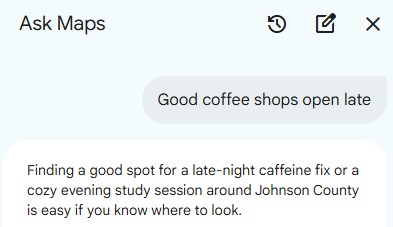
Ask Maps also surfaces AI-generated summaries that help users evaluate businesses faster. Alongside recommendations, users may see review summaries and suggested questions to ask — such as what customers say about communication, or whether appointments are required — before ever visiting a website or picking up the phone.
For businesses, that means customers may form impressions based on how Google’s AI interprets your profile, reviews, photos, and business details.
The key takeaway is simple: AI can only recommend what it understands. The more complete and accurate your online information is, the better your chance of appearing in those recommendations.
Why Your Google Business Profile Matters More Than Ever
All of these AI-powered updates have one thing in common: they rely on accurate business information.
Whether Google is recommending a business through Ask Maps, summarizing reviews, or helping a customer compare local options, its AI systems need reliable data to understand which businesses fit a specific request.
While your Google Business Profile remains the most direct source of that information, and consistent messaging across your website, social media, and other online listings reinforces how Google understands and represents your business.
Your profile is no longer just a directory listing. The content you (and cusotmers) add is a primary source that helps Google’s AI understand:
- What services you offer
- Where you operate
- When you’re available
- What makes your business unique
- Which types of customers or jobs you’re best equipped to handle
In the past, customers filled in the gaps themselves. If your profile was missing information, they might call to ask whether you served their neighborhood, offered a specific service, or had availability that week. Or they might never call at all, and you’d miss the business without ever knowing it.
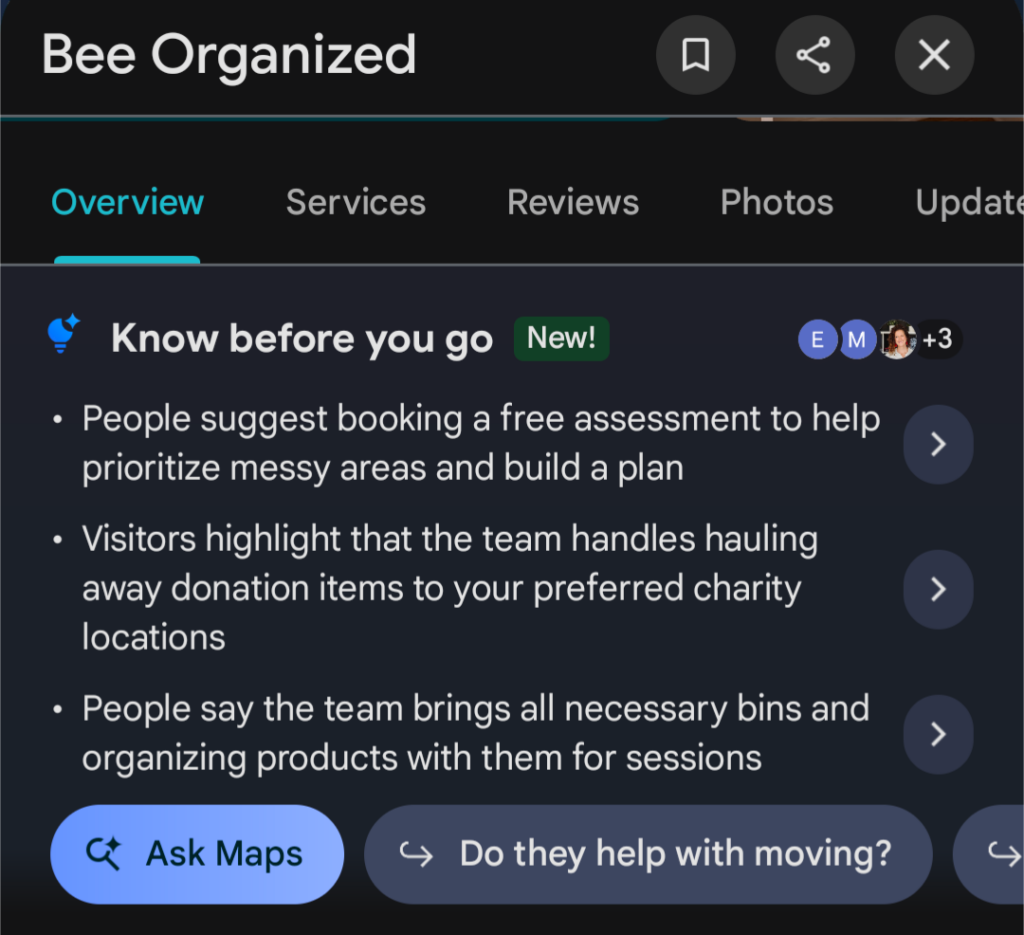
AI systems work differently. They can only evaluate the information they have access to. When details are incomplete, outdated, or inconsistent, Google’s confidence in recommending your business may drop – which is why having reviews, an optimized listing, website content, and social media engagement is so important.
Customers are making more of their decision before they ever visit your website, and the details in your profile — services, reviews, photos, and business attributes — carry more weight in that process.
A simple way to think about it: your Google Business Profile now acts as a digital representative for your business. The more complete and accurate that representative is, the better positioned you’ll be when customers turn to AI-powered search tools for recommendations.
How Reviews Help AI Understand Your Business
Reviews have always mattered for local SEO, but AI is changing how they influence visibility.
Historically, reviews built trust and contributed to local ranking signals. Today, AI systems also analyze review content to understand what customers actually say about your business.
In the future reviews will do more than provide a star rating.
They help AI identify:
- Services customers frequently mention
- Common strengths and specialties
- Customer experiences
- Business reputation and trustworthiness
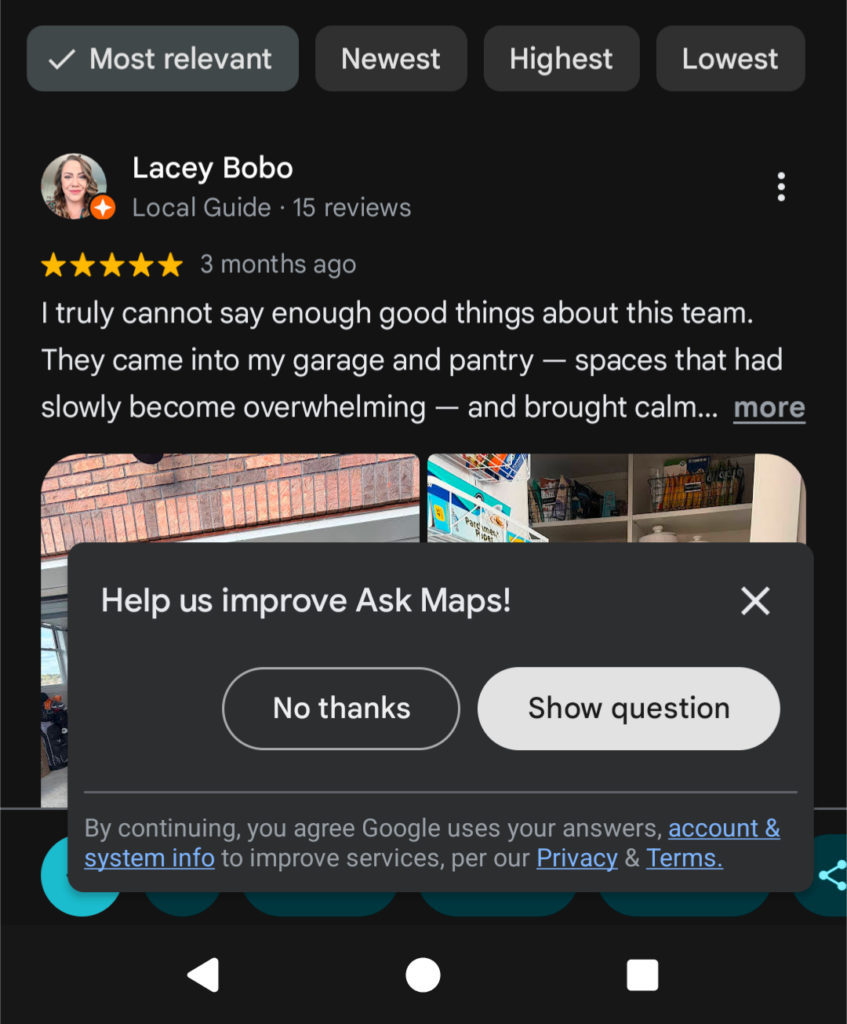
If multiple customers mention fast response times, strong communication, or expertise with a specific type of project, that information helps AI recognize when your business is a good match for a customer’s request. Reviews are also where the situational language shows up naturally. A customer who writes about a pre-move garage cleanout has described a scenario you may never have thought to list as a service.
This is worth acting on directly. When you ask for a review, ask the customer to mention what you actually did for them rather than leaving it at “great service.” A review that names the job is worth more than one that only names a rating.
That makes review generation and review responses more important than ever. Fresh, detailed reviews give useful context to both potential customers and the AI systems evaluating your business.
The AI-Ready Business Profile Checklist
If you’re a business owner wondering where to start, focus on these seven areas.
- Describe your services the way customers describe their problem. This is the one that separates an AI-ready profile from a merely complete one. Most businesses write their services in industry language: “residential organization services,” “landscape design and installation.” Customers don’t ask that way. They ask about a garage they need cleared before a move, or a backyard they want redone before summer. Write your service descriptions and business description around the situations customers are actually in, and you give Google’s AI far more to match against.
- Verify your hours. Make sure your regular hours and holiday hours are accurate. AI systems and customers alike rely on this information when evaluating businesses.
- Confirm your phone number. If customers — or AI-assisted calling systems — can’t reach your business, you may miss opportunities without realizing it.
- Complete your services list. Detailed service information helps Google understand which customer needs your business can solve.
- Fill out every relevant attribute. Service areas, accessibility features, appointment options, and other attributes provide the context AI uses to match businesses with specific requests.
- Keep reviews coming. A steady stream of recent reviews sends strong trust signals and adds valuable context about your business.
- Refresh your photos. Current photos help customers evaluate your business and signal that your profile is active and maintained.
Frequently Asked Questions
Is Ask Maps available everywhere?
Not entirely. Ask Maps launched in the U.S. and India in March 2026 and expanded to more than 150 additional countries in August 2026, but some capabilities — such as ordering food, checking hotel rates, and finding local events inside Maps — remain limited to certain markets. Availability can also vary by device and account.
Do I have to pay to appear in Ask Maps?
No. Ask Maps recommendations are generated from Google’s understanding of businesses and locations. Maintaining a complete, accurate, and active Google Business Profile remains one of the most important ways to improve visibility.
How is this different from traditional SEO?
Traditional SEO focuses on helping your business rank in search results. AI-powered search experiences focus on helping systems understand, evaluate, and recommend businesses. Many of the fundamentals are the same, but the goal is expanding from earning visibility to earning recommendations.
Can I see what AI says about my business?
Yes. Try asking Google Maps, Google Search, or AI assistants the same questions your customers would ask. If the information that comes back is incomplete or inaccurate, your Google Business Profile and other online listings are usually the best place to start making improvements.
The Future of Local Search Is More Conversational
AI isn’t replacing local SEO; it’s changing how local search works.
Customers are asking detailed questions instead of typing simple keywords. Google’s AI is responding by recommending businesses, summarizing information, and helping users act without navigating multiple websites or search results.
Businesses that treat their Google Business Profile as an active visibility channel, not a one-time setup, will be better positioned as these experiences become more common.
If AI is helping customers decide which businesses to contact, it’s worth knowing what AI says about yours.
Rank Fuse has dedicated Answer Engine Optimization (AEO) services to help businesses evaluate and improve their AI visibility across Google Maps, AI-powered search experiences, and answer engines like ChatGPT.
Want to know how your business appears when customers ask AI for recommendations?
Contact Rank Fuse, or run a DIY AI Search audit yourself and get some answers in under 2 minutes.
Free. 10 non-branded prompts across ChatGPT and Google AI Overviews. Score in 2–3 minutes.